FLORIDA ELECTRICAL & FIRE ALARM ☎ (561) 552-3753

Symptoms We Diagnose and Fix

Most generator failures trace back to a short list of causes. Here's how we work through them:

01 Won't crank / won't start

The most common call we get. Usually it's a dead or weak battery — standby units eat through batteries in 2–3 years in Florida heat — or corroded terminals, a failed starter, or the unit sitting in alarm lockout after a fault. We test the battery under load, check the charging circuit, and reset and verify the control panel.

02 Cranks but won't catch

Points to fuel or spark: stale gasoline in portables (gas goes bad in months), a clogged carburetor, a failed fuel solenoid, a fouled spark plug, or — on gas-fed standbys — a supply or regulator issue. We work through the fuel system methodically instead of guessing.

03 Starts, then shuts down

Classic low-oil shutdown, overheating, or a sensor fault. Could also be a failing voltage regulator that trips the controller. We read the controller's fault codes and test the sensors rather than swapping parts blindly.

04 Runs rough or surges

Often dirty fuel, a restricted air filter, or a governor/throttle issue. On standby units, this can also mean the unit hasn't exercised properly in months and needs a full tune-up to return to stable operation.

05 No power output

The engine runs but the house stays dark. We check the generator's breakers, the transfer switch contactors, wiring connections, and the excitation/AVR circuit — a common failure point after lightning storms, which the Treasure Coast gets plenty of.

06 Transfer switch problems

Utility power returns but the switch won't transfer back, or it chatters, hums, or sticks mid-transfer. We inspect the contactors, relays, and control wiring, and repair or replace the faulty components.

Preventive Maintenance Keeps It Reliable

The number-one reason generators fail during hurricanes is simple neglect. A generator is an engine, and engines need care:

  • Oil and filter service on schedule — dirty oil is the fastest way to kill an air-cooled engine.
  • Battery testing and replacement before it strands you; Florida heat shortens battery life.
  • Air filter and spark plug replacement so the unit starts clean and runs at full voltage.
  • Fuel system care — stabilizer and fresh fuel for portables; supply checks for gas-fed standbys.
  • Exercise-cycle verification — confirming your standby unit actually runs its weekly self-test and completes it.
  • Transfer switch exercise — making sure the switch moves cleanly under test, not for the first time in a blackout.
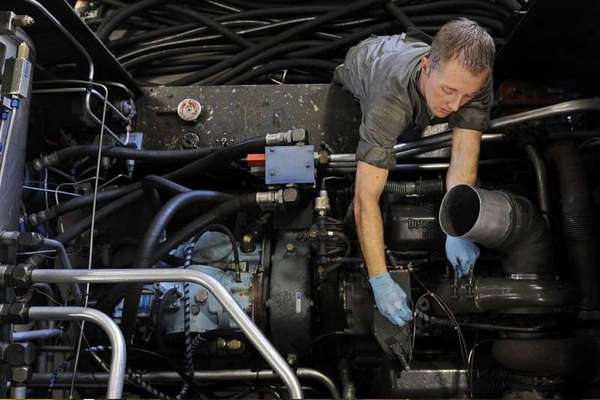
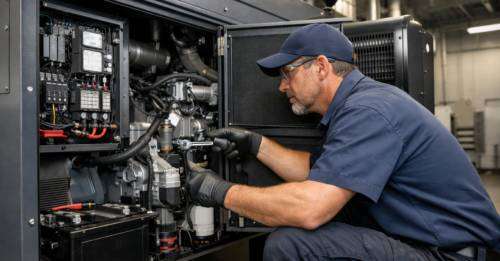
Technician inspecting generator equipment during a service visit

Timing matters: service your generator in spring, well before hurricane season. Once a storm is in the forecast, every repair shop on the Treasure Coast is booked solid — the units that survive outages are the ones that were maintained beforehand.

How a Service Visit Works

  1. Symptom review. We listen to what's happening — noises, fault codes on the controller display, how long it's been since it ran.
  2. Systematic testing. Battery, fuel, ignition, sensors, and output are tested in order. You get a diagnosis, not a parts-guessing game.
  3. Straightforward options. Repair, replace the failed component, or — if the unit is truly worn out — an honest assessment of repair vs. replacement.
  4. Load test. After the fix, the generator runs under load to prove it produces clean, stable power before we leave.

Frequently Asked Questions

Why won't my generator start after sitting all year?

Nine times out of ten it's the battery — standby batteries typically last 2–3 years in Florida heat, and a portable's pull-start issues usually come from stale fuel gumming up the carburetor. Both are quick to diagnose.

How often should a standby generator be serviced?

At least once a year, and every 100–200 hours of run time. In practice that means an annual tune-up each spring: oil, filters, spark plugs, battery check, and a full exercise and transfer test.

My standby generator runs its weekly test, but is that enough?

The weekly exercise keeps the engine limber, but it doesn't replace maintenance. Oil still degrades, batteries still weaken, and transfer switches still need to be tested under load. Think of it like a car that idles in the driveway — it still needs oil changes.

The generator runs, but nothing in the house has power. What's wrong?

The generator's own breaker may have tripped, the transfer switch may not have transferred, or the unit may have lost excitation and is producing no voltage. We check each link in the chain during the visit.

Can you fix a transfer switch, or does the whole thing need replacing?

Most transfer switch faults are repairable — contactors, relays, and control boards can usually be replaced individually. We only recommend a full replacement if the enclosure or mechanism is damaged beyond reliable repair.

Do you work on both portable and standby generators?

Yes — both portable units and permanently installed automatic standby generators, along with their transfer switches and inlet connections.

What does stale fuel do to a portable generator?

Untreated gasoline starts breaking down in about a month. It varnishes the carburetor jets, the engine won't start or surges badly, and the fix is a carburetor cleaning. Fuel stabilizer and running the carb dry after each use prevent most of it.

How fast can you come out if my generator fails during an outage?

We offer 24/7 emergency service. During a major storm, demand spikes across the whole county — which is exactly why we push spring maintenance, when scheduling is easy and parts are in stock.
Service Areas

Generator repair and maintenance visits across the Treasure Coast:

  • Port St. Lucie
  • Fort Pierce
  • Stuart
  • Jensen Beach
  • Palm City

Who You're Calling

Service provider: Florida Electrical and Fire Alarm LLC

Phone: (561) 552-3753

Email: services.floridaelectrical@gmail.com

License: Florida Electrical License #ER13016161

Hours: Monday–Saturday 8 a.m.–5 p.m.; 24/7 emergency service

Service-area business covering Port St. Lucie, Fort Pierce, Stuart, Jensen Beach, and Palm City. No storefront — we come to you.

Schedule a Service Visit

Describe the problem and we'll call back to set up a visit.

Call (561) 552-3753